| Request a FREE Estimate! | Search |
View Cart | Checkout | Login |
Mowing Info
Mowing Tips
Did you know that the way you mow your lawn can really help your lawn…or seriously hurt it. Here’s why. Mowing properly helps your lawn stay greener and prevents soil erosion. Mowing improperly promotes a yard full of weeds and an unsightly lawn.
Mowing Height
The higher the better! Surprisingly, most people mow their lawns too short (including most landscapers). Ideally, you should mow your lawn at your mower’s highest setting for most of the year…starting in the spring. Keep the grass between 3.5 and 4.5 inches high (measuring from the ground to the tips of the grass blades after you mow it). When the grass growth slows in the fall (October), start lowering the cutting height gradually so that it’s about 2” tall at the last cut. Keep mowing until the grass stops growing completely.
Why Should You Mow High?
A Greener Lawn
First, it looks better. We all want a green lawn. That green color comes from the high grass blades. And, the higher you mow your grass, the deeper its roots will be. Deeper roots allow your lawn to stay green with less water, and fend off insect attacks without dying off.

Mowing high also cools the soil surface and keeps it at a temperature where roots can survive better…which also keeps your lawn greener.
Finally, your lawn will also be “greener”…environmentally speaking. A lawn that’s mowed high filters rainwater and prevents soil erosion much better than a lawn that is mowed too short.
Fewer Weeds
Tall grass actually creates a canopy of shade which shades out weeds. This natural shade helps stop weeds from germinating. If weeds do germinate, they’ll have a more difficult time getting established under a canopy of tall grass. In fact, according to studies at Penn State, mowing high is as effective at preventing crabgrass as any chemical. So, if you want to have an organic, chemical-free lawn without a lot of weeds, mow high!
Note: If you can’t live without that short cut look, consider overseeding with our MicroClover. The good news: the leaves of MicroClover shade the soil even if they’re cut short and can help reduce other weed problems. The bad news: you will have a lot of clover. Click here for more information on MicroClover.
Mowing Frequency
If you mow your lawn higher, you won’t have to cut it as often. As a rule of thumb, don’t remove more than 1/3 of the total leaf surface when mowing your lawn. This may require mowing every four to five days during rapid growth in the spring. Removing more than one-third of total leaf surface can severely injure the grass plant by decreasing its ability to support its underground portions.
To cut one-third of the leaves…
| Height of cut | Mow when turf reaches | Growth between mowings |
| 2.0” | 3.0” | 1.0” |
| 4.0” | 6.0” | 2.0” |

Dealing with Clippings
If you follow the 1/3 rule, grass clippings can be left on the lawn. Excessive accumulation of clippings from infrequent mowing may smother the turf and should be removed. Clippings left on the lawn do NOT promote thatch build up and should be returned to the lawn whenever possible. The only time to bag clippings is if your lawn has a lot of weeds that are going to seed. Here, bagging collects the seeds to keep them from returning.
Grass clippings can be used in compost piles or as mulch. Backyard compost stations are becoming increasingly popular and grass clippings make a welcome addition. To compost correctly, you need to create the correct carbon to nitrogen balance in the pile (“browns” to “greens”). Combining or layering grass clippings with tree leaves, straw, soil or other materials considered to have a high carbon content is an effective way to achieve this.
Mowing Tree Leaves
Want free compost and a chemical-free way to prevent weeds? Just mow over your leaves in the fall and chop them into small pieces (this might take 2-3 passes). The leaf residue will sift into the turf within a few weeks and will be unnoticeable in the spring. You can even rake the leaves in planting beds, fence lines or other areas right out into your lawn and mow them. For best results, mow when the leaves are dry. New studies have shown that mulching leaves into your lawn is also an excellent, chemical-free way to control weeds.
Mowing Equipment
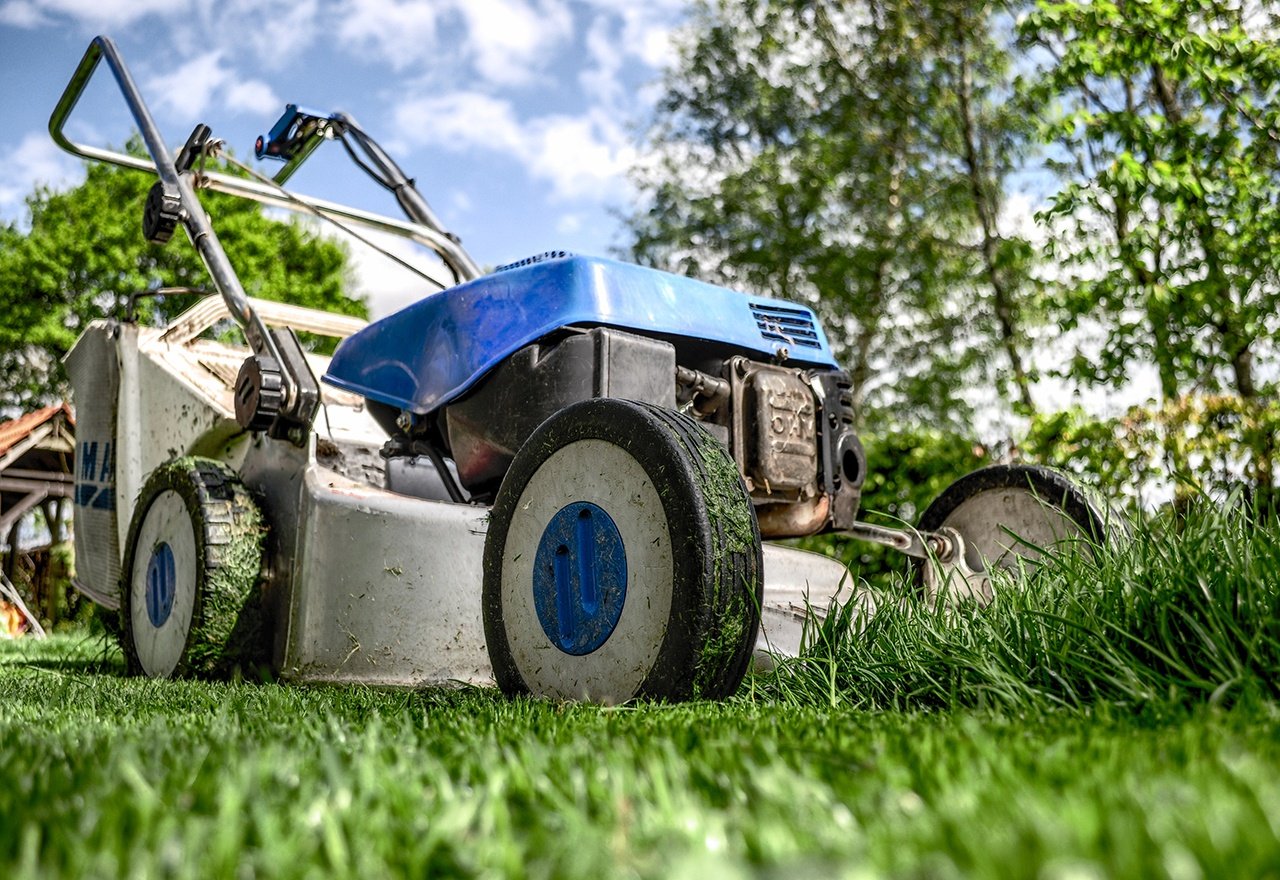
The key to a quality cut is to use a sharp, well adjusted mower. Dull, poorly adjusted equipment tears, rather than cuts, the grass. Torn grass leaves actually promote disease invasion and give the lawn a frayed, brownish look.
An easy way to get a crisp, sharp cut is to buy an extra mower blade so you’ll always have a sharp blade on hand. How often you change the blade is up to you. Many professional turf managers change blades daily…but, for most homeowners, once a month would be a good start.
For best results, mow when the grass is dry…this also eliminates clumping. Changing the mowing direction from time to time can also reduce wear patterns. Recent advances in mulching mowers have made them increasingly popular. They differ from the side discharge and reel mowers because they recirculate the grass within the mowing chamber to produce smaller pieces. In addition to organic lawn care, Good Nature provides professional lawn mower tune-up and sharpening. Call us today.