



by Jesse Smith, Native Landscapes & Gardens, on March 26, 2026
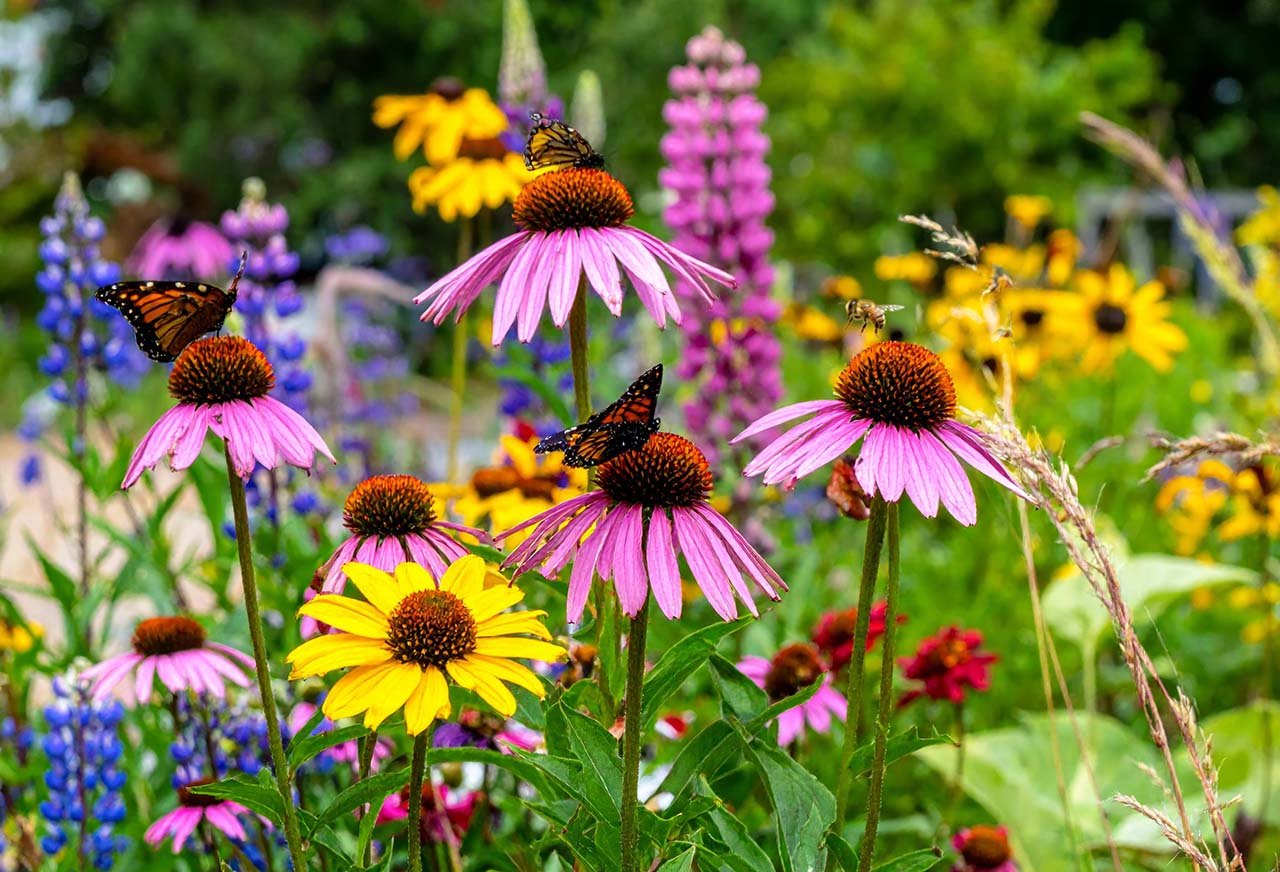
As a nature enthusiast and Pollinator Ecologist for nearly a decade, I am always thinking about how I can create my home as a habitat to support the little things we may not pay much attention to. Creating a pollinator garden at home is a simple way to connect with and support the natural habitat we share with birds and bees. It's an opportunity to create a space that serves a broader purpose beyond just being a yard.
So, what is a pollinator garden? Simply put, it is a garden where we have plants that aren't just pretty, but also offer essential resources for pollinators. It is a purposeful space designed to provide nectar, pollen, and seeds, as well as an ecosystem for nature's little helpers. The pollinator garden can serve as a rest stop for a weary bee flying around our neighborhood searching for a flower to visit. To really support our local habitats, we want to plant native plants. These are the species you might see when you visit a local park or see a flower along a trail. There is a growing movement to take these plants and incorporate them into our landscaping at home.
By planting native plants, we provide the excellent nutritional food sources that our local pollinators need. We also support specialist insects like the Monarch Butterfly, who needs specific plants like milkweed to survive. Other specialist insects may need a flowering dogwood tree (Cornus florida), an oak tree (Quercus), or goldenrod flowers (Solidago). These plants are foundational for insects, and for some, they are the only plants that provide food or nesting. Considering Ohio and the Midwest region have nearly 500 different species of native bees, it is important to provide the variety of food they need to thrive.
A native pollinator garden can be aesthetic by utilizing traditional landscaping practices. By adding a defined garden bed edge and utilizing structural elements like trees and shrubs, we can create breathtaking gardens. Maintenance with native plants is actually simpler than many traditional landscape plants. Because they are specialized for living here, they know the soil and, once established, are accustomed to how much or little rain we receive. When it comes to weeding, native plants will naturally fill in the gaps of the garden. By filling these spaces, they create a "living mulch" that leaves less room for weeds to grow.
The most pivotal time for a native pollinator garden is the first couple of years as the plants grow and become established. In this time, they will need the most care. But what about having bees near where we live and play? As a pollinator ecologist, I can tell you bees are focused on collecting pollen and nectar. If you give them the space to do it, you will hardly notice them. They are much more interested in the flowers than the people nearby.
If you are ready to install a pollinator garden, here is where to start. To research more on the topic, check out Homegrown National Park and Doug Tallamy's books. To get involved locally, look into organizations like the Wild Ones or Nature In My Backyard. To install a native pollinator garden yourself, look for local native plant nurseries. Lastly, you can call a landscape company that specializes in creating them, such as Native Landscapes and Gardens in Chagrin Falls, Ohio. A simple act, such as changing what you plant, can make a difference.